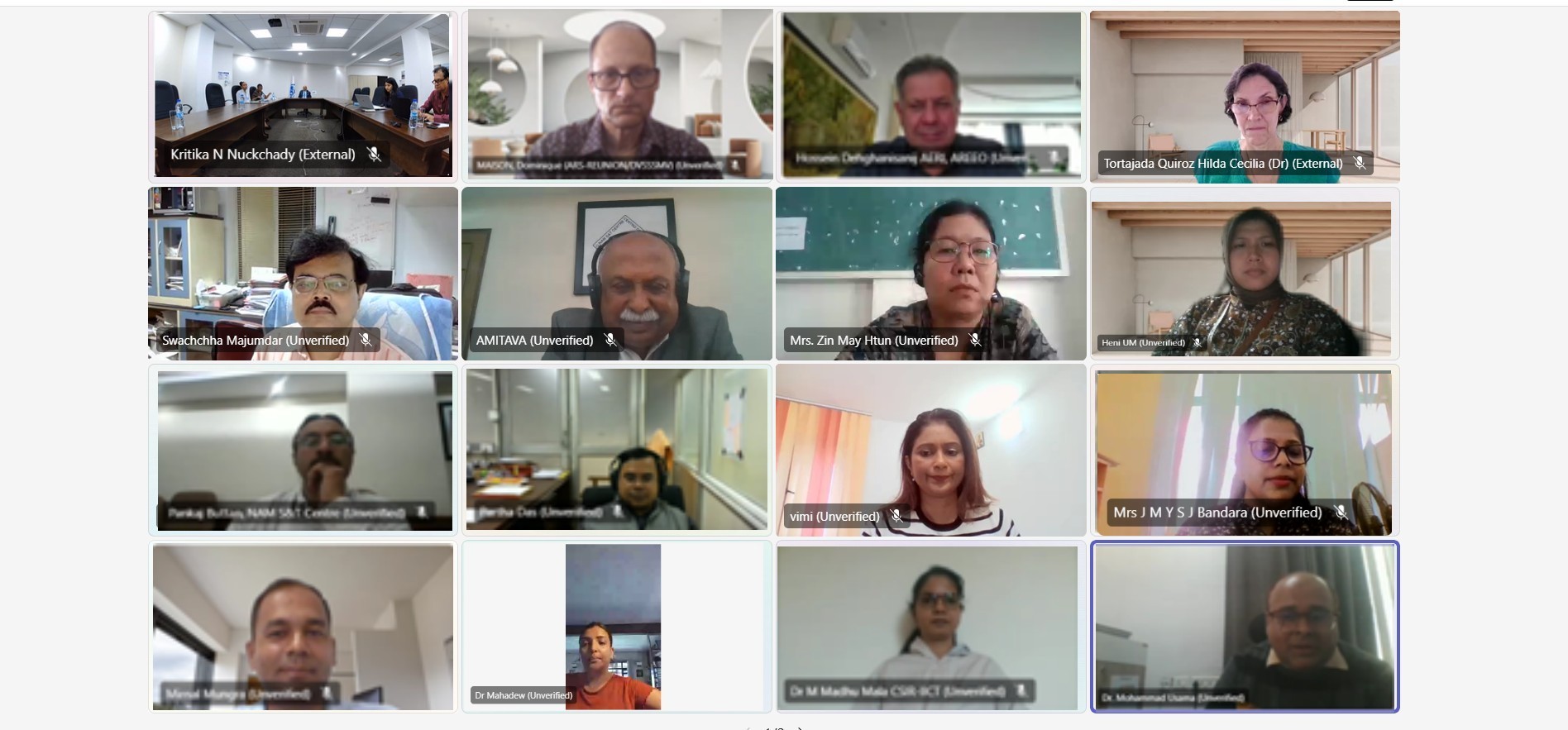
The International Workshop on “Clean Water and Sanitation in the Developing World: Perspectives, Best Practices and Future Challenges” was held virtually on 20–21 November 2025. It was jointly organised by the Centre for Science and Technology of the Non-Aligned and Other Developing Countries (NAM S&T Centre), New Delhi, and the Indian Ocean Rim Association (IORA) Secretariat.
The workshop addressed persistent challenges related to access to clean water and adequate sanitation in developing countries, recognising these as fundamental human needs and critical enablers of sustainable development. Discussions were anchored in Sustainable Development Goal 6 (SDG 6) and highlighted the need for integrated, inclusive and climate-resilient approaches that combine appropriate technologies, supportive policy frameworks, local knowledge and community engagement. Participants included experts, researchers, practitioners and policymakers from France (Réunion), India, Indonesia, Iran, Mauritius, Myanmar, Sri Lanka, Russia and the United Kingdom, and focussed on fostering cross-country learning and exchange of best practices.
Opening remarks by the IORA Secretariat and the NAM S&T Centre underscored the urgency of accelerating progress on water and sanitation in developing regions facing climate change, rapid urbanisation and infrastructure constraints. The importance of regional cooperation, science-based solutions and innovation was emphasised throughout the event.
The technical programme comprised a special invited lecture, a keynote address, thirteen paper presentations and a panel discussion. Sessions covered innovative and decentralised water and wastewater treatment technologies, integrated water resource management, smart and data-driven solutions, human rights-based approaches to water and sanitation, and renewable-energy-powered systems for climate resilience. Case studies from diverse national contexts illustrated practical solutions for rural and urban areas, coastal and disaster-prone regions, and Small Island Developing States. The panel discussion highlighted the need to integrate indigenous knowledge with modern technologies, strengthen governance and human capacity, and ensure that solutions are locally adaptable and sustainable.