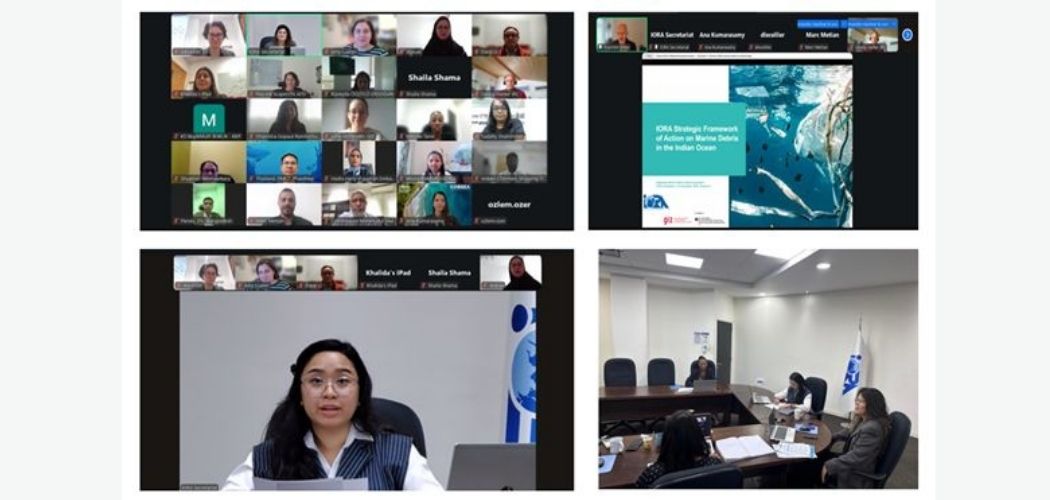
The IORA-AFD Online Workshop on the Integrated Marine Debris Observing System (IMDOS) was convened to address the persistent threat of marine debris, defined as persistent solid material manufactured or processed and discarded into the marine environment,which significantly impacts the ecosystems and economies of Indian Ocean countries. The problem is further intensified by the region's unique hydrodynamic systems, which contribute to waste accumulation in coastal areas and oceanic gyres. Held on November 5-6, 2025, the workshop’s primary purpose was to enhance knowledge of regional and international monitoring initiatives and to bridge the gap between scientific research and evidence-based policy.
Key objectives included introducing the IMDOS initiative to Member States, sharing best practices for data harmonization and monitoring methodologies, and exploring synergies across regional groups regarding the science-to-policy interface. The event was jointly organized by IORA, the French Development Agency (AFD), and IMDOS. It successfully connected regional stakeholders with the international IMDOS network, a joint initiative of GEO Blue Planet and the Global Ocean Observing System (GOOS), which seeks to build a global interoperable marine debris monitoring system to benefit the research community and decision-making bodies.
The program featured technical sessions on scientific evidence in the region and harmonization efforts by international entities like UNEP-GPML and regional groups like COBSEA. Key activities included presentations on the development of the IMDOS Task Team for Regional Observing Systems, sharing national experiences, and reviewing policy guidelines such as the IORA Strategic Framework of Action on Marine Debris. Participants engaged in interactive discussions to foster knowledge exchange on standardizing methods to tackle the global plastic pollution problem.
Main outcomes included a detailed overview of different regional monitoring frameworks and the identification of best practices towards an interoperable global system. This initiative is directly relevant to IORA’s Blue Economy cross-cutting issue and the Jakarta Concord (2017), contributing to regional cooperation by providing the reliable baseline data necessary to establish effective mitigation plans for marine pollution across the Indian Ocean